





How the Best Photographer in Jaipur Handles Professional Product Photoshoots
In the visually driven world of modern commerce, the quality of your product images directly influences your sales figures. Whether you are selling exquisite Blue Pottery, handcrafted textiles, or high end jewelry, the image is the first interaction a potential customer has with your brand. In a culturally rich city like Jaipur, where artistry is embedded in every corner, the competition is fierce. Local businesses are increasingly realizing that amateur photos taken with a smartphone are no longer sufficient to stand out in the global marketplace.
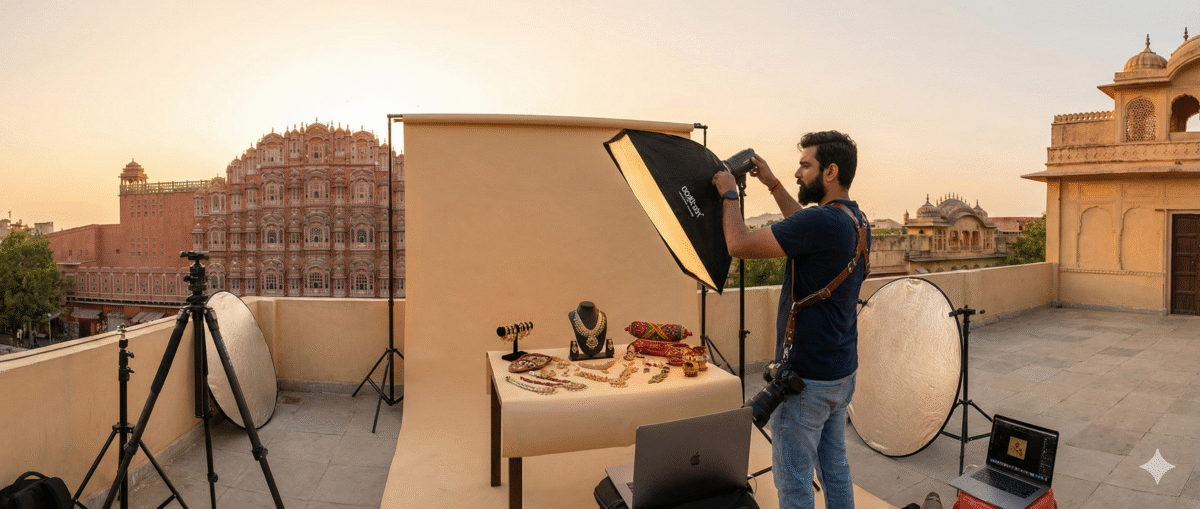
To truly capture the essence of these intricate items, one must rely on an expert. This is where the best Photographer in Jaipur steps in to transform physical objects into digital assets that drive revenue. It is not merely about clicking a button. It is a complex process involving lighting physics, artistic composition, and a deep understanding of consumer psychology.
This guide explores the meticulous process behind high quality commercial photography. We will break down how top tier studios like Photo Fashion Studio execute these sessions to deliver stunning results that elevate brands.
The Consultation and Conceptualization Phase
Every successful project begins with a conversation. Before a single light is set up, a professional team dives deep into the client’s vision. This initial phase is crucial for establishing the visual language of the campaign.
Understanding Brand Identity
A generic photo works for a marketplace listing, but a brand photo tells a story. During the consultation, the photographer asks critical questions. Who is the target audience? Is the brand vibe minimalist and modern, or is it rustic and traditional? For example, a luxury jewelry brand requires a different lighting setup compared to an organic skincare line.
Creating a Mood Board
Visual references are vital. The team collaborates with the client to create a mood board. This collection of images serves as a blueprint for the shoot. It defines the color palette, the style of props, and the lighting mood. This preparation ensures that when you book a professional product photoshoot in Jaipur, there are no surprises regarding the final aesthetic.
Logistical Planning
This stage also covers the “who, what, and where” of the shoot.
- Product List: Creating a detailed inventory of items to be shot.
- Timeline: Estimating how long each setup will take.
- Deliverables: Defining the number of final images and their required formats.
The Art of Pre-Production and Prep
Preparation is the silent hero of photography. A disorganized shoot leads to wasted time and subpar results. The experts at Photo Fashion Studio spend a significant amount of time in pre-production to ensure the actual shooting day runs smoothly.
Product Preparation
The camera lens is unforgiving. It magnifies every speck of dust, fingerprint, or loose thread. Therefore, products must be pristine before they go on set.
- Cleaning: Jewelry is polished to a mirror shine to remove oils.
- Steaming: Garments and textiles are steamed to remove creases that are difficult to fix in post production.
- Sorting: Items are grouped by size or category to minimize changes in lighting setups.
Equipment Selection
Different products require different tools. A macro lens is essential for capturing the facet details of a gemstone, while a wide angle lens might be used for larger furniture pieces. The best Photographer in Jaipur arrives equipped with a specific arsenal of lenses and camera bodies tailored to the unique textures and sizes of your inventory.
Mastering Lighting Techniques
Lighting is the language of photography. It determines the texture, depth, and color accuracy of the product. In product photography, lighting is never accidental. It is engineered with precision.
Studio Lighting vs Natural Light
While natural light is beautiful, it is inconsistent. For e commerce catalogs where consistency is key, studio lighting is preferred. It allows the photographer to replicate the exact same look for hundreds of products over multiple days.
Managing Reflections: Jaipur is a hub for jewelry and metalwork. These reflective surfaces are notoriously difficult to photograph. If not handled correctly, the camera sees itself or the studio lights reflected in the gold or silver. Professionals use diffusers, bounce cards, and polarizing filters to control these reflections. They sculpt the light to highlight the metal’s luster without creating distracting glare.
Highlighting Texture: For products like hand block printed fabrics or leather goods, texture is a selling point. The lighting must be positioned at an angle to create subtle shadows that reveal the weave or grain of the material. This attention to detail is what sets apart a professional product photoshoot in Jaipur from a standard amateur attempt.
Composition and Styling Strategies
Once the lighting is perfected, the focus shifts to composition. This is where creativity meets marketing. The goal is to guide the viewer’s eye to the most important features of the product.
The Hero Shot: This is the main image used for advertising. It is often dynamic and stylized. It might involve creative angles, floating elements, or dramatic backdrops.
- Rule of Thirds: Placing the product off-center to create interest.
- Leading Lines: Using props to point towards the product.
- Symmetry: Creating a sense of balance and stability.
Flat Lays and Knolling: For social media, flat lays are incredibly popular. This involves arranging the product and related props on a flat surface and shooting from directly above. It is an excellent way to tell a story. For instance, a notebook might be photographed with a pen, a cup of coffee, and glasses to suggest a work setting.
Prop Selection: Props should support the product, not compete with it. Photo Fashion Studio maintains a vast collection of backgrounds and props. They select items that complement the color scheme without cluttering the frame. If the product is a vibrant blue pottery vase, they might use neutral, earthy tones for the background to let the blue pop.
The Technical Execution
During the actual shoot, the workflow is disciplined and efficient. This is where the photographer’s technical prowess shines.
Tethered Shooting: Professional shoots are almost always “tethered.” This means the camera is connected to a computer or a monitor. As the shutter clicks, the image appears instantly on a large screen. This allows the client and the creative team to spot issues immediately. Is the label straight? Is the focus sharp? Fixing these issues on set is far better than trying to fix them later.
Focus Stacking: For small items like rings or earrings, a standard camera shot often results in only part of the item being in focus due to depth of field limitations. To solve this, the best Photographer in Jaipur uses a technique called focus stacking. They take multiple photos at different focus distances and merge them in software to create an image that is tack sharp from front to back.
Color Checker and Calibration: Color accuracy is non-negotiable. A customer returning a dress because the “red” looked “maroon” online is a loss for the business. Photographers use color calibration charts during the shoot to ensure that the colors recorded by the sensor match the real life product perfectly.
Post Production and Retouching
The click of the shutter is only half the job. The raw images then move to the editing suite. This is where the final polish is applied to make the images commercial-ready.
Background Removal: For Amazon or other e-commerce platforms, a pure white background is often a requirement. Editors carefully clip the product out of the original background. This requires precision, especially for items with fuzzy edges like wool or hair.
Retouching Imperfections: Even with thorough cleaning, microscopic dust can appear on the image. Retouchers remove these distractions. They also correct minor manufacturing flaws, such as a loose thread or a slight scratch, ensuring the product looks its absolute best.
Consistency Check: When viewing a collection page on a website, all images must appear cohesive. The horizon lines should be at the same level, and the lighting intensity should be identical. Photo Fashion Studio implements a rigorous quality control process to ensure that every image in the batch aligns with the brand guidelines.
This level of detailed post-processing is a standard inclusion when you invest in a professional product photoshoot in Jaipur.
Delivery and File Management
The final step is delivering the assets to the client. This is not just about handing over a USB drive. It involves organizing files for different uses.
High Resolution vs Web Ready
Clients receive files in multiple formats.
- TIFF or High Res JPEG: For print media like billboards, brochures, and catalogs.
- Web Optimized JPEG: Smaller file sizes for websites and social media to ensure fast loading times without quality loss.
Cloud Storage and Backups Professional studios keep backups of your session. If you accidentally delete your files six months later, they can often restore them for you. This security and reliability are part of the professional service package.
Why Expertise Matters
In a city teeming with talent, choosing the right partner is critical. Product photography is a technical discipline that requires patience and specialized gear. It is distinct from wedding or event photography.
By hiring an expert, you are buying peace of mind. You know that the lighting will be flattering, the colors will be accurate, and the files will be delivered on time. It transforms your inventory into a visual feast that entices customers to click “Add to Cart.”
When you work with Photo Fashion Studio, you are leveraging years of experience in visual storytelling. They understand the local market nuances while adhering to global quality standards.
Conclusion
The journey of a product from a warehouse shelf to a customer’s screen is bridged by photography. It is a meticulous process that combines art and engineering. From the initial concept discussions to the final pixel peeping in the editing suite, every step matters.
For businesses in the Pink City looking to scale, collaborating with the best Photographer in Jaipur is an investment that yields tangible returns. It elevates your brand perception and builds trust with your audience.
Similarly, ensuring you have a dedicated budget for a professional product photoshoot in Jaipur allows you to showcase the intricate details of your craftsmanship. Whether you are a startup or a legacy brand, high-quality images are the most powerful tool in your marketing arsenal.
FAQs
Q1. How are product photography charges calculated?
Ans: Pricing structures vary based on the studio. Some charge on a per product basis, while others charge a day rate or an hourly rate. The cost also depends on the complexity of the styling and the volume of items. High end creative shots usually cost more than standard white background catalog shots.
Q2. Can I use the photos for billboards and print ads?
Ans: Yes, but you must inform the studio beforehand. Print requires extremely high resolution files (300 DPI) and often a different color profile (CMYK) compared to web images. Professional studios will shoot and export the files specifically to meet these print requirements.
Q3. Do I need to provide the props for the shoot?
Ans: Most professional studios have a stock of basic props like wooden boards, fabrics, and geometric shapes. However, if your brand requires very specific items that align with a unique theme, it is often best for you to provide those to ensure they perfectly match your brand vision.
Q4. How long does it take to receive the final images?
Ans: The turnaround time depends on the number of products and the level of retouching required. Typically, a standard batch of catalog images takes about 7 to 10 business days. Complex creative campaigns with heavy compositing work may take longer.
Q5. What is the difference between ghost mannequin and flat lay?
Ans: Ghost mannequin photography is used for apparel to make it look like an invisible person is wearing the clothes, showing the fit and shape in 3D. Flat lay involves laying the garment flat on a surface, which is more casual and great for social media but shows less about the drape and fit of the item.